
ACM and Caste
Published:
Over a year ago, I noticed that the ACM Policy Against Harassment and their Diversity, Equity, and Inclusion (DEI) statement prohibited harassment and discrimination based on race, ethnicity, religion, gender, sexual orientation, citizenship, nationality, disability, and age, but it had at least one glaring omission: Caste.
Caste is a millennia-old oppressive system of social stratification whose practices are predominant in South Asia and diasporic Southasian communities. It is a hierarchical system of societal segmentation whose membership is determined by birth, wherein Brahmins are placed in the privileged position as upper-caste and those assigned to its bottom rung—Dalits and Adivasis (indigenous people)—are regularly subjected to severe marginalization and persecution. These social demarcations of inequity and dehumanization are reified by the harmful practices of caste that emphasize caste ``purity’’ through untouchability, residential segregation, restrictions on what professions one can pursue based on their caste, food-based discrimination that create taboo against meat-consumption as being “unhygienic” or “dirty”, and enforcement of endogamy through sociocultural coercion and violence. Casteism shares many structural similarities with racism, and consequently there is a shared intertwined history of resistance to casteist and racist violence. Caste oppression is not just actively practiced today in countries like India (The Wire, NBC, The Hindu, DW)—e.g., impacting its science and technology sectors—but is also prevalent within Southasian diasporic communities in USA, Canada (recent caste survey), and UK. There has been some recent successes in recognizing caste discrimination in Seattle and Toronto, but dismantling caste system in the diaspora continues to face political challenges—e.g., in California. Caste discrimination is also prevalent within Silicon Valley and the broader tech industry (Reuters, New York Times, Washington Post, Bloomberg, Wired, NBC, Slate, New Yorker, Vaghela et al.) and unsurprisingly caste bias is also reflected in the technology this sector produces. It therefore becomes particularly important that ACM as “the world’s largest educational and scientific computing society” recognizes and prohibits caste discrimination.
And we have some good news! Having noticed the omission of caste in ACM’s anti-harassment policy and DEI statement, I reached out to Dr. Vanessa Murdock, the then Chair of the ACM SIGIR Executive Committee and a close friend. In an act of allyship, that I am really grateful for, Vanessa raised this issue with the relevant folks in the ACM organization and (just in time for this year’s Dalit History Month) both ACM’s anti-harassment policy and DEI statement have been updated to explicitly include caste as a protected category.



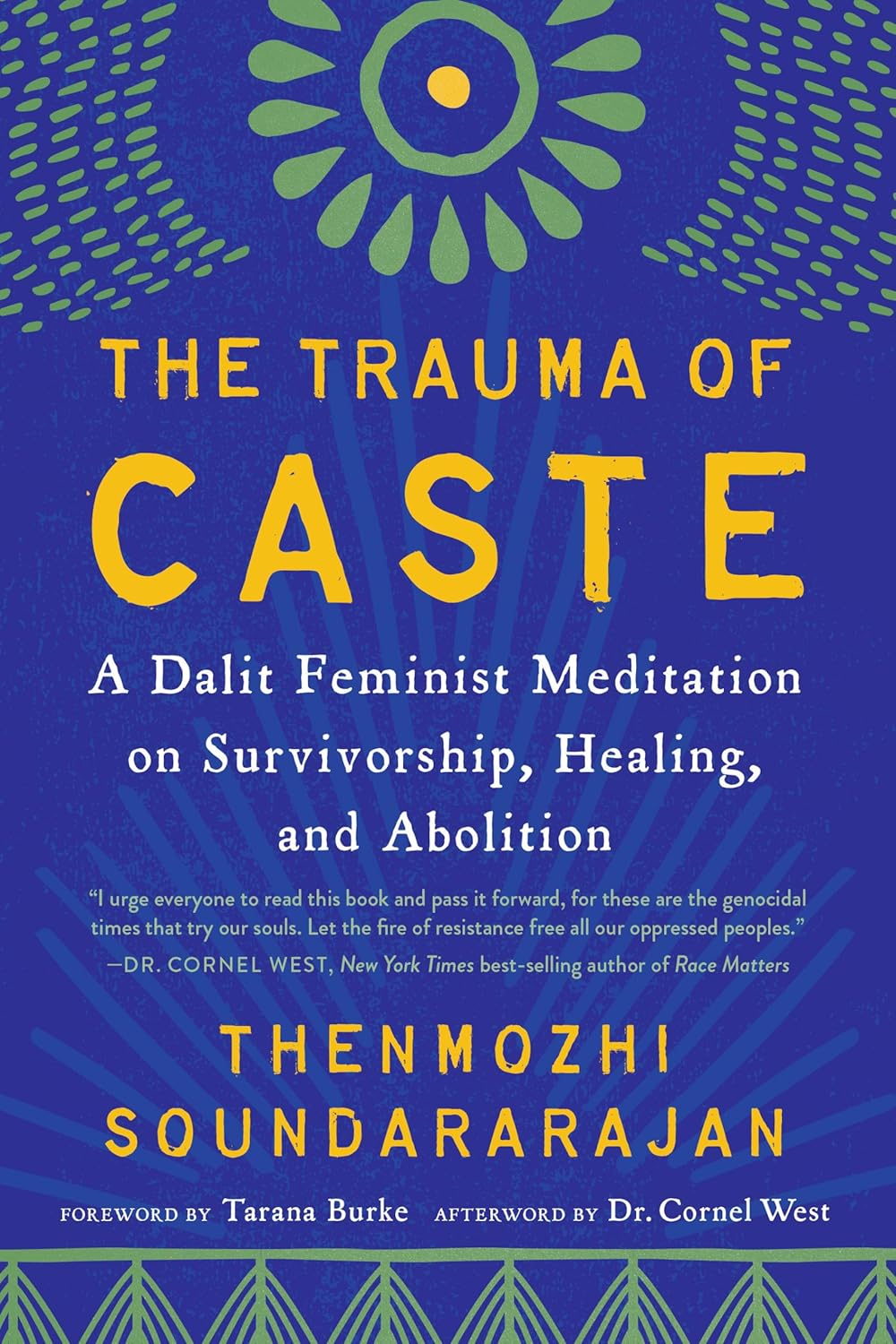
In spite of this positive news, a lot of work remains to be done yet to ensure that our research and professional communities remain anti-casteist spaces which is only possible if we put our anti-casteism into active practice. For those of us who identify as anti-caste ally, this is a reminder to stand in solidarity with our caste-oppressed colleagues who face discrimination in our professional spaces and whose contributions to computing are regularly erased. And those who may be less familiar with the history of caste oppression, I invite you to learn more on this topic and in turn become anti-caste allies. Here are pointers to a couple of books and a documentary to get you started on that journey.
 |  |  |
Annihilate Caste. Smash the Brahminical Patriarchy. Jai Bhim.
Positionality: I identify as an anti-caste ally. My views on caste are informed by my lived experiences of witnessing caste oppression, as well as experiencing caste-related bigotry in my own life.
Would you like to comment on or discuss this post? You can do so on these social media threads on Bluesky, Mastodon, and LinkedIn.